Build vs Buy Software: Key Factors for Making the Right Choice

Gilbert Kirgotty

13/11/2020 Case Studies
Coding software vs using software out of the box

Are you looking for a smarter way to launch a business solution—one that saves time, controls costs, and reduces commercial risk?

Whether you’re creating an online store, sales incentive programme, customer loyalty programme, or partner portal, you will eventually face a critical question: should you build custom software or buy an existing solution?

Building gives you greater control over how your solution works, while buying can help you launch faster using established functionality. Neither option is automatically right or wrong. The best choice depends on your requirements, budget, timeline, internal resources, and long-term plans.

Navigating the Build vs Buy Dilemma in Software Solutions

Building bespoke software allows you to design functionality around your specific business requirements. It can give you greater control over the architecture, features, development priorities, and user experience—provided your contracts clearly establish ownership, licensing, and access to the underlying code.

For example, if your business needs a highly specialised sales incentive workflow or a unique sales claim programme, custom development may allow you to create the precise processes you have in mind.

However, building, managing, and maintaining bespoke software comes with significant responsibilities. Beyond the initial development costs, you need to account for hosting, testing, security, integrations, upgrades, technical support, bug fixes, and future development.

You must also consider what happens if key developers leave or your business requirements change. A custom solution may give you more control, but your organisation must have the resources and expertise to support that control over time.

Then there is commercially available software. Off-the-shelf solutions can help you start interacting with customers or partners sooner by configuring proven functionality instead of developing every component from scratch.

Some products specialise in one function, while broader platforms support several connected use cases. However, the level of configuration, integration, scalability, and extensibility differs considerably between providers.

This is the real build-versus-buy dilemma: should you create software tailored to your exact needs, purchase an existing product that may require some compromises, or choose a configurable platform that combines established functionality with room to customise?

Kademi: Bridging the Build vs Buy Gap

In today’s highly competitive market, businesses often want the best of both worlds: the flexibility to tailor a solution and the ability to enter the market quickly, all while remaining cost-effective.

That’s why Kademi provides a smarter middle ground. Instead of building every component from scratch or accepting a rigid off-the-shelf product, you can configure existing applications, workflows, content, and branding around your programme.

Kademi brings together tools for partner management, sales incentives, claims, rewards, training, communications, content, automation, and analytics within one platform. You can use the capabilities you need today, integrate relevant systems and data, and extend the solution where genuine custom requirements exist.

This approach allows you to launch core functionality rapidly while continuing to develop the solution as your programme evolves.

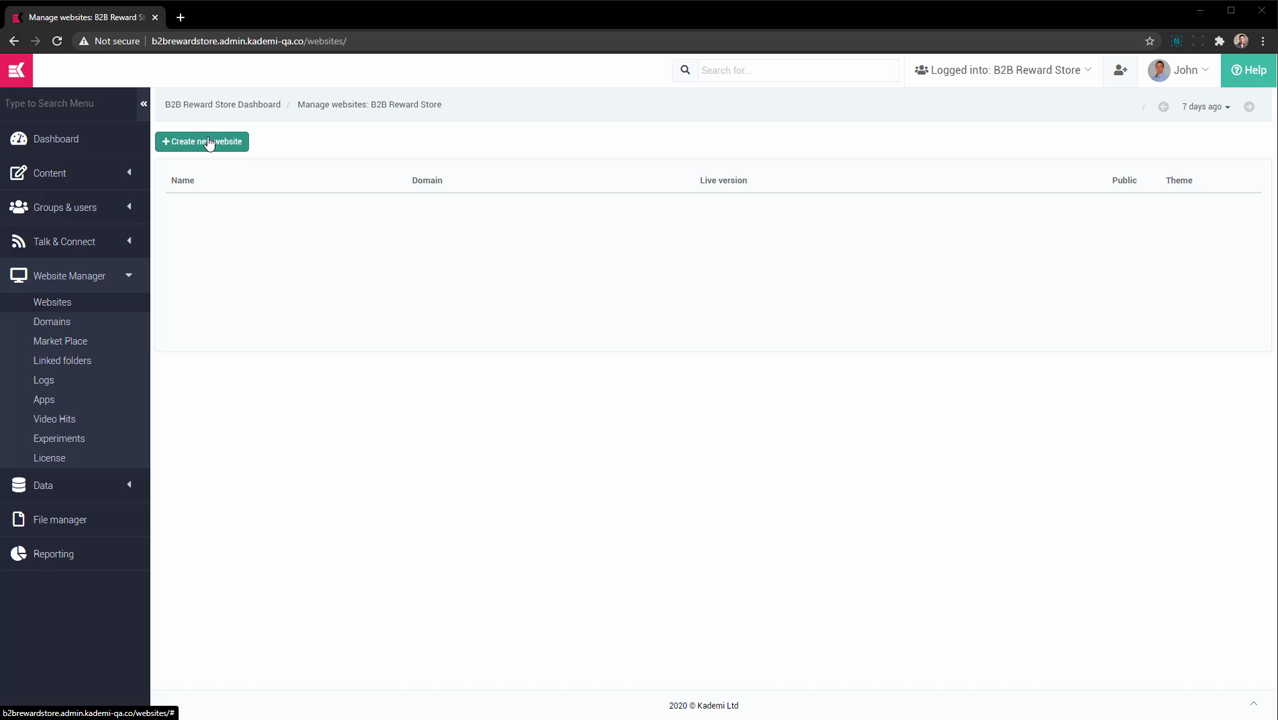
Watch the below video and discover how easy it is to configure a B2B sales incentive program in under five minutes using Kademi.
How to Make the Decision

When deciding whether to build or buy software, evaluate more than the initial feature list or quoted price. The decision can affect your workflow, budget, security, customer experience, and long-term strategic direction.

Here are the most important factors to consider.

Business Requirements

Begin by identifying what the solution must achieve.

Which requirements are essential? Which are useful but negotiable? Are your processes genuinely unique, or could they be supported through configurable workflows?

Custom software may be appropriate when the required capability differentiates your business and cannot be supported adequately by existing platforms. If most requirements are common to other organisations, buying or configuring proven software may be more efficient.

Total Cost of Ownership

Compare the complete cost of each option, not merely the initial setup price.

Custom software may involve development, infrastructure, maintenance, security, testing, support, and future enhancement costs. Purchased software may include subscription fees, implementation, user licences, integrations, data migration, customisation, and vendor support.

Ask what each option is likely to cost over several years and whether those costs are predictable.

Time to Value

How quickly do you need to launch?

Building custom software can take months or longer, depending on its complexity. Buying or configuring an existing platform can shorten the path to launch because core applications and infrastructure are already available.

However, even purchased software may require branding, content, data migration, integrations, testing, and administrator training before it is ready for users.

Internal Resources

Do you have the technical team needed to design, build, test, secure, and maintain the solution?

Development does not end at launch. If your organisation cannot support the software over its complete lifecycle, building may create a long-term dependency on external developers.

A purchased platform transfers much of the underlying maintenance responsibility to the vendor, although your team will still need to manage the programme itself.

Scalability and Flexibility

Consider how the solution will respond as your programme grows.

Will it accommodate additional users, regions, partner types, brands, currencies, languages, or business processes? Can you add functionality without rebuilding the entire system?

Custom software can be designed for flexibility, but only if scalability is considered from the beginning. A configurable platform may offer a faster path to expansion through additional applications, workflows, and integrations.

Integrations and Data Portability

Your solution may need to connect with CRM, ERP, identity management, payment, e-commerce, or other business systems.

Before deciding, determine which integrations are essential, how data will move between systems, and who will maintain those connections.

You should also understand how your data can be accessed and exported. If your requirements change, can you retrieve the information in a usable format and move it elsewhere?

Security and Compliance

Building software means taking responsibility for security architecture, access controls, vulnerabilities, updates, monitoring, and compliance requirements.

Buying software does not remove these concerns, but an established provider may already have relevant controls, documentation, and processes in place.

Assess both the software and the organisation responsible for maintaining it. Security should be part of the decision from the beginning—not an inspection added just before launch.

AI Requirements

AI has added another layer to the build-versus-buy decision. Before developing an AI-enabled solution, ask whether AI is genuinely necessary and whether an existing platform already provides the capability you need.

Consider data quality, privacy, security, human oversight, model costs, accuracy, and how the feature will be maintained as AI technology changes.

Building an AI feature involves more than connecting to a model. Buying may speed up adoption, but you still need to understand how the vendor uses your data and where human review remains necessary.

Find Your Perfect Solution With Kademi

The decision between building custom software and buying an existing solution depends on your business needs, budget, timeline, and internal capabilities.

Build when the software is strategically unique and your organisation has the resources to own and maintain it over time. Buy when established functionality, faster deployment, and predictable maintenance matter more than complete control.

A configurable platform offers another option. Kademi combines proven applications with the flexibility to configure, integrate, and extend your solution. This can help you balance cost, speed, functionality, and long-term adaptability without building every component from the ground up.

FAQs

  • An online store
  • B2B sales incentive program
  • Customer loyalty program 
  • Collect feedback from my customers 
  • Online training 

If time isn’t on your side and you need to enter the market quickly, then maximize COTS software that will give you a competitive advantage.

If you have a limited budget, a progressive COTS is your ideal solution. It keeps your setup costs low so you have more funds to invest in content creation, marketing, and management of the solution.

If you’re not willing to budge and you can’t compromise on requirements that work within the capabilities of COTS software, you’ll need to go down the path of custom software development. Using Kademi’s approach, however, your core business solution can be configured in hours, then lightly customized using a software developer without breaking the budget. This includes features like sales incentive software, tailored to your specific needs.

Relying on software developers to make changes to your solution every time you need it updating can be expensive. So consider a platform like Kademi, that enables you to switch on additional capabilities, and drop-in application components, and improve your solution over time with ease.

If you need to resell or replicate a solution, Kademi provides tools to easily replicate and scale solutions without the need to rely on software developers every time.

If you would like to discover how Kademi’s software can save you time, and reduce cost and commercial risk, reach out using the below form, or contact your success manager if you’re an existing Kademi customer.

Subscribe

Join the Kademi community: subscribe for the latest news, updates and demonstrations.

Kademi does not share data with 3rd parties.